
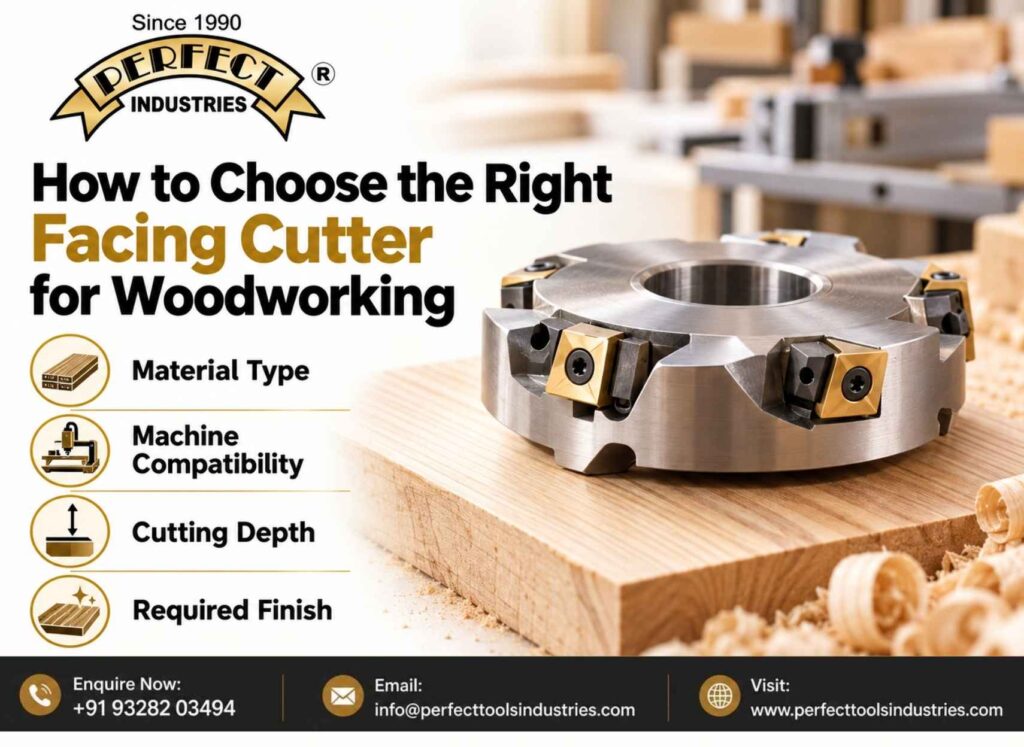
Facing Cutter Selection Guide
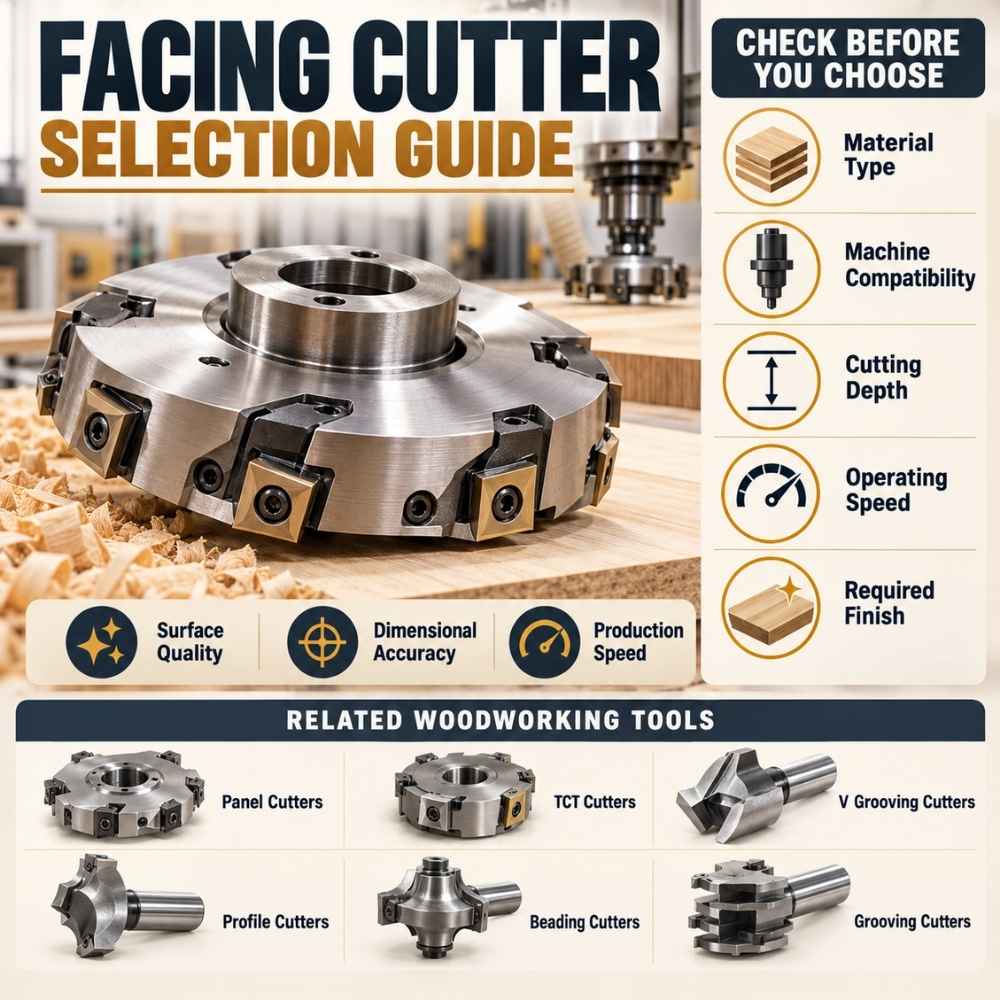
In modern woodworking, surface quality, dimensional accuracy, and production speed are important for achieving consistent results. Whether you manufacture furniture, process panels, or run a professional workshop, the right Facing Cutter can improve surface finishing and material removal.
Choosing the right cutter depends on factors such as material type, machine configuration, cutting depth, operating speed, and required finish.
This guide explains how to select a suitable Facing Cutter and how related tools such as panel cutters, TCT Cutters, V grooving cutters, Profile Cutters, beading cutters, and Grooving Cutters can support different woodworking applications.
Understanding Facing Cutter Selection for Modern Woodworking
Choosing the right tool starts with understanding the material, machine, cutting depth, required finish, and production volume. These factors help ensure consistent performance and efficient woodworking.
01. Match the Cutter With Your Material
MDF, plywood, laminated panels, particle board, and solid wood can behave differently during machining. Selecting the Facing Cutter according to the material can improve surface quality, reduce chipping, and support consistent results.
02. Check Machine and Cutting Requirements
Before purchasing, check spindle configuration, cutter dimensions, cutting depth, operating speed, and machine capacity. Proper compatibility helps maintain stable cutting and reduces unnecessary tool wear.
03. Consider Finish Quality and Production Volume
High-volume production requires durable tooling with consistent performance, while custom woodworking may prioritize flexibility and finish quality. Choosing according to actual production needs can reduce rework and improve machining efficiency.
Key Factors to Check Before Buying a Facing Cutter
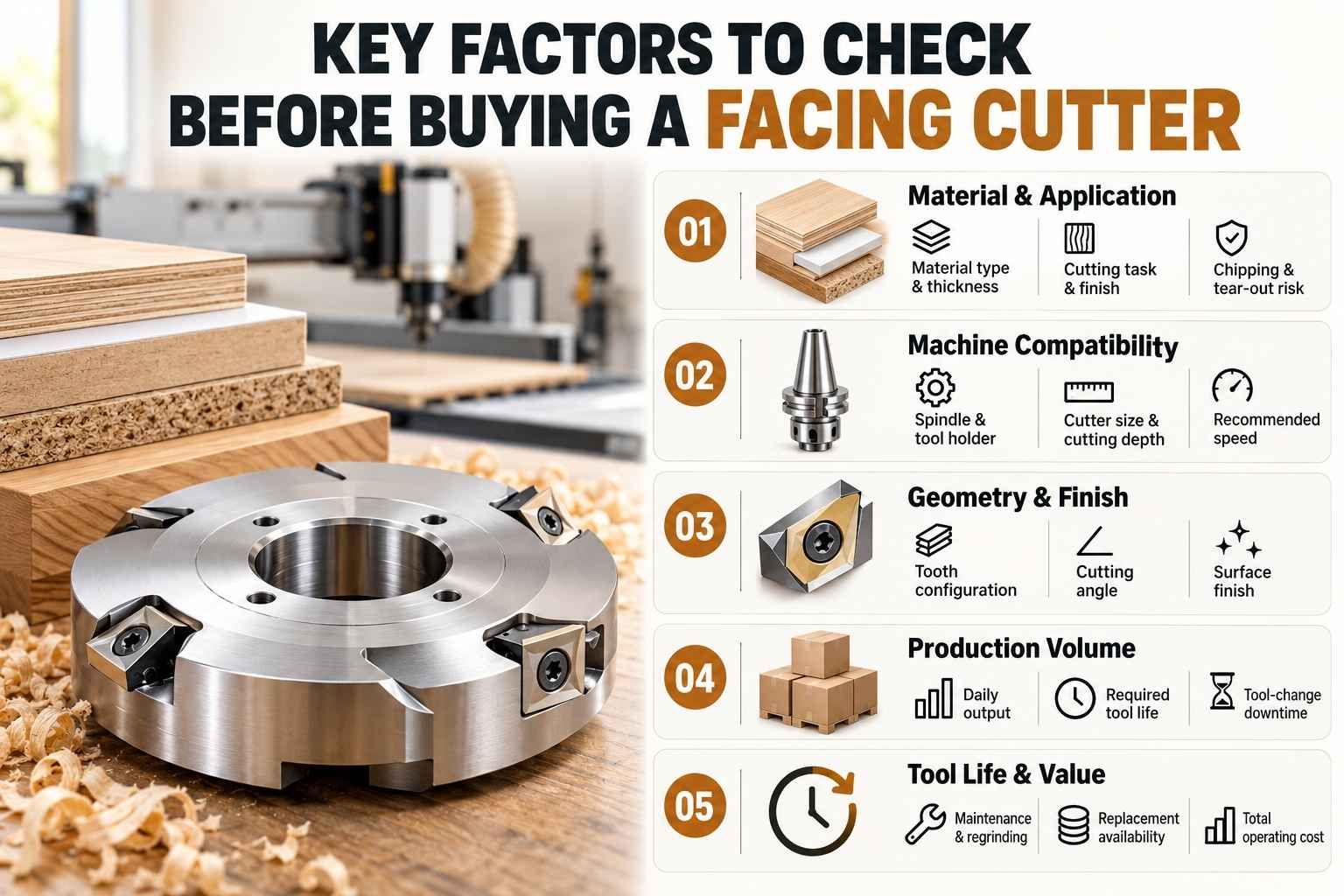
Before choosing a cutter, consider the material, machine setup, cutting requirements, production volume, and expected finish. A reliable Woodworking Tools Manufacturer can also help select the right tool for better performance and machining consistency.
01. Material and Application
MDF, plywood, laminated panels, particle board, and solid wood can behave differently during machining. Match the cutter to the material and application to improve cutting quality and reduce rework.
Key points to check:
- Material type and thickness
- Cutting application and required finish
- Risk of chipping or tear-out
Choosing the right cutter for the material can support smoother and more consistent results.
02. Machine Compatibility
Check the spindle, tool holder, cutter dimensions, operating speed, machine capacity, and required cutting depth. Proper compatibility supports stable operation and helps reduce tool wear.
Important factors include:
- Spindle and tool holder compatibility
- Cutter size and cutting depth
- Recommended operating speed
A properly matched tool can improve machine stability and cutting performance.
03. Cutting Geometry and Finish
Tooth configuration, cutting angle, body design, and tool geometry can affect surface quality and cutting smoothness. For high-volume production, consistent results are especially important.
Consider:
- Tooth configuration
- Cutting angle and geometry
- Required surface finish
Suitable cutting geometry can help achieve cleaner edges and more predictable finishing.
04. Production Volume
Low-volume workshops may prefer versatile and easy-to-replace tooling, while large production units may require longer tool life and greater repeatability. Choose according to actual production needs.
Production factors include:
- Daily production volume
- Required tool life
- Expected downtime and replacement frequency
Matching the cutter to production volume can improve efficiency and reduce unnecessary interruptions.
05. Tool Life and Overall Value
Do not compare cutters only by price. Consider tool life, maintenance, replacement needs, finish quality, and downtime. A reliable cutter can reduce tool changes, wastage, and rework while providing better long-term value.
Evaluate:
- Expected service life
- Maintenance and regrinding options
- Replacement availability and operating cost
Looking at overall value helps buyers make a more practical and cost-effective tooling decision.
Comparing the Facing Cutter With Woodworking Products
Woodworking production often uses different cutters for cutting, grooving, profiling, and finishing. Choosing each tool according to its specific application can improve accuracy and production efficiency.
01. Panel Processing and Durable Cutting Tools
A Panel Cutter supports controlled machining of boards used in furniture, cabinetry, and modular interiors. Consider board thickness, machine setup, cutting speed, and edge quality when selecting one.
TCT Cutters offer good wear resistance for repeated machining operations. Their performance also depends on tool quality, material, and operating conditions.
02. Grooving and Detailed Machining Tools
A V-grooving cutter creates precise V-shaped channels for folding and decorative panel applications. Select the cutter according to the required groove angle and depth.
Grooving Cutters create channels for joints, inserts, hardware, and other woodworking applications. Groove dimensions, material, spindle setup, and cutting speed should be considered before selection.
03. Profile and Decorative Edge Tools
Profile Cutters create specific contours and decorative shapes, while a Beading Cutter produces rounded or detailed edge profiles. Proper cutter geometry and machine setup help maintain consistent results.
Together, these Woodworking Products allow manufacturers to select the right tool for each machining stage, improving cutting quality, productivity, and overall consistency.
Choosing a Reliable Facing Cutter Manufacturer
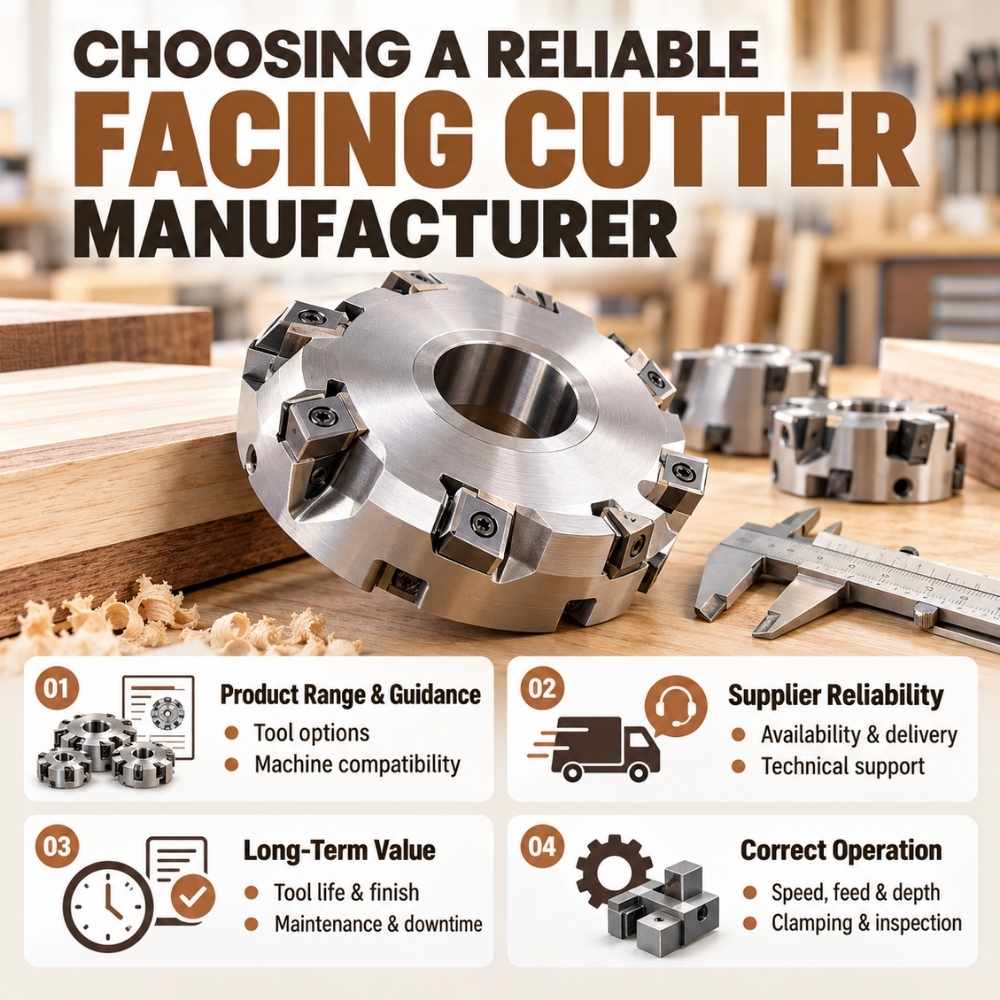
Choosing the right supplier can affect tool performance, product quality, and production efficiency. A reliable Woodworking Tools Manufacturer should understand different applications and provide suitable tooling solutions.
01. Check Product Range and Guidance
Look for clear product specifications, machine compatibility, and application-based support. A good range may include facing cutters, panel cutters, TCT Cutters, V-grooving cutters, Profile Cutters, beading cutters, and Grooving Cutters for different machining requirements.
02. Evaluate Supplier Reliability
When searching for a Facing Cutter Ahmedabad supplier, consider product availability, technical support, delivery reliability, and after-sales service. Reliable Woodworking Suppliers should also help customers select tools according to their material and application.
03. Compare Long-Term Value
Do not choose a cutter based only on its initial price. Consider tool life, finish quality, productivity, maintenance, replacement needs, and possible downtime. A balanced choice can provide better value over time.
04. Follow Proper Operating Practices
Even quality Woodworking Products require correct spindle speed, feed rate, cutting depth, clamping, and workpiece support. Regular inspection and cleaning can also help reduce vibration, tool wear, and production interruptions.
Facing Cutter Selection Guide for Different Applications
| Woodworking Application | Recommended Cutter | Main Purpose | Key Benefit |
|---|---|---|---|
| Surface Preparation | Facing Cutter | Controlled material removal | Smooth and consistent surfaces |
| Panel Processing | Panel Cutter | Cutting and machining panels | Accurate panel processing |
| MDF and Engineered Boards | TCT Cutters | Durable cutting operations | Good wear resistance |
| V Groove Applications | V Grooving Cutter | Creating precise V grooves | Clean and consistent grooves |
| Decorative Shaping | Profile Cutters | Creating custom profiles | Accurate decorative designs |
| Edge Decoration | Beading Cutter | Creating rounded bead profiles | Improved edge appearance |
| Slot and Channel Work | Grooving Cutters | Creating grooves and channels | Consistent groove dimensions |
Frequently Asked Questions About Facing Cutter
A Facing Cutter helps remove material from a surface to achieve a more uniform and controlled finish. It can support precision machining in furniture, panel processing, and other woodworking applications.
Check your machine spindle, cutter dimensions, operating speed, cutting depth, and material type. The cutter should match both the machine specifications and the required machining result.
Depending on its design and specifications, a suitable cutter can work with materials such as MDF, plywood, particle board, solid wood, laminated panels, and other engineered wood products.
Businesses can compare local woodworking tool suppliers in Ahmedabad based on product quality, technical support, specifications, availability, and experience with industrial woodworking applications.
Yes. A properly selected and correctly operated cutter can help create a more consistent surface while reducing uneven machining, excessive material removal, and unnecessary rework.
A Panel Cutter generally focuses on panel-related cutting applications, while a Facing Cutter focuses more on controlled surface machining. The best choice depends on the specific operation and machine setup.
No FAQ found.
TCT Cutters use carbide-tipped cutting edges that can provide good wear resistance and consistent performance for demanding woodworking applications when used with suitable operating conditions.
A V-grooving cutter is useful when a project requires V-shaped grooves for folding, detailing, decorative designs, or specialized panel-processing applications.
Profile Cutters create specific shapes and contours on woodworking components. They are useful for decorative edges, shaped furniture parts, and applications that require a customized profile.
Use the correct spindle speed and feed rate, maintain proper workpiece support, avoid excessive cutting depth, keep the machine clean, and inspect cutting edges regularly.
Consider material compatibility, machine specifications, cutter dimensions, production volume, required finish, durability, technical support, and the supplier's ability to provide suitable tooling.
An experienced Woodworking Tools Manufacturer can provide application-focused tooling and help customers select products according to material, machine configuration, cutting requirements, and production goals.
No FAQ found.
Final Thoughts on Choosing the Right Facing Cutter
A Facing Cutter can support accurate surface machining, consistent production, and quality finishing in woodworking applications. The best results come from matching the cutter with the material, machine, and production requirements.
For furniture manufacturing, panel processing, and industrial woodworking, combining the right Panel Cutter, TCT Cutters, V Grooving Cutter, Profile Cutters, Beading Cutter, and Grooving Cutters can improve overall machining efficiency.
Choosing a reliable Woodworking Tools Manufacturer can also help you select suitable Woodworking Products and achieve more consistent results.
Choose the right tool for the right application for better and more productive woodworking.
Get in Touch for Expert Advice on Facing Cutter
For high-quality facing cutters, choose Perfect Tools Industries. We offer durable, efficient, and precision-driven equipment for all project sizes. Whether you’re crafting or mass-producing, our machines ensure reliability and performance. Contact us today to discover the best solutions for your woodworking needs.
For More Info:
📞 Enquire Now: +91 93282 03494
📧 Email: info@perfecttoolsindustries.com
🌐 Visit: www.perfecttoolsindustries.com